Bookworm Classic - Word Hunt
LaytonWord
4.72.63K Reviews
- Version
- 9.1.2
- Installs
- 500.00K
- Age Rating
- Everyone
Screenshots
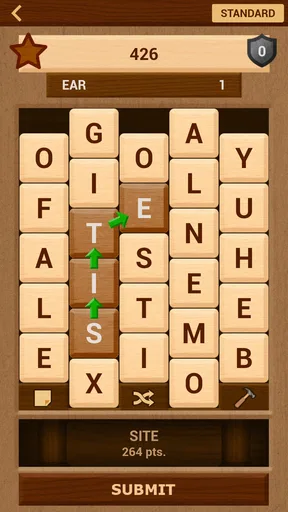
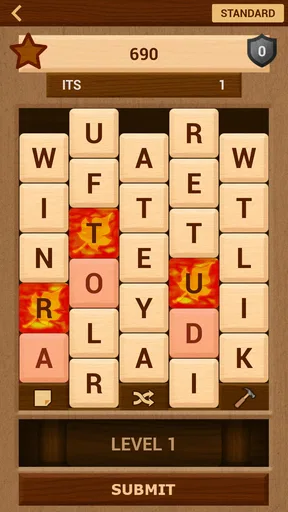
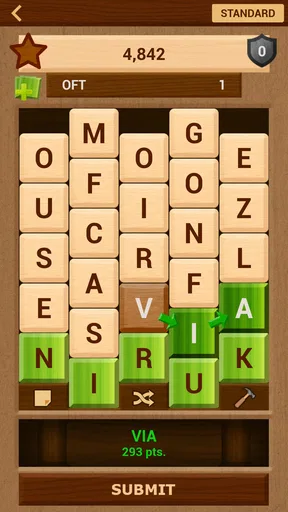
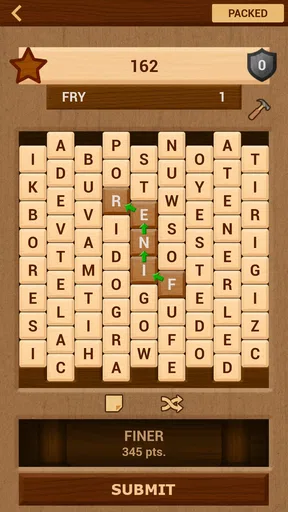
Our Review of Bookworm Classic - Word Hunt
 Analysis by Appyee
I keep coming back to Bookworm Classic because it understands something many word games forget: finding a word is only half the fun. The other half is deciding whether to use a short, safe word now or spend a little longer searching for something more valuable. That small decision gives every round a pleasant tension without turning the game into a stressful test.
As a free word puzzle game from Layton, it is easy to approach and familiar enough for almost anyone to understand quickly. The central appeal is its large vocabulary, with more than 347,000 words available to discover. I would not call it a flashy or story-heavy game. Its strength is the quiet satisfaction of scanning letters, spotting a possibility, and watching a valid word clear from the board.
My overall view is positive, with one important qualification: this is best for players who enjoy thoughtful, unhurried word hunting rather than rapid-fire competition. If you want a focused brain break, it is a strong choice. If you need constant novelty, dramatic progression, or a social leaderboard, you may find its classic design too restrained.
Why the classic word-hunting format still works
I find the classic word-hunting format rewarding because it makes attention, not speed, the main tool. In this section, I’ll look at how the board encourages a second scan and why its broad vocabulary can make a familiar-looking puzzle less predictable. That also helps clarify the choice ahead: whether this kind of open-ended search suits your breaks better than a clue-led or competitive word game.
A simple board that rewards looking twice
The game’s most effective quality is its straightforward interaction. I can open it, study the available letters, trace a word, and immediately understand the result. There is very little learning overhead, which makes it suitable for a short session while waiting for an appointment or for a longer stretch of relaxed play at home.
What makes the format more interesting than a basic anagram exercise is the visual search involved. I am not merely rearranging a fixed group of letters on a list. I am examining the board for paths and combinations that I initially overlooked. A word that seems obvious after it is found can be surprisingly difficult to notice when several alternatives compete for attention.
That design creates a useful rhythm. I usually begin with the most visible words, then slow down and inspect the edges, corners, and less obvious letter connections. This second pass is where the game earns its name. It encourages patience without demanding that I memorize a complicated rule set.
The large vocabulary changes how I play
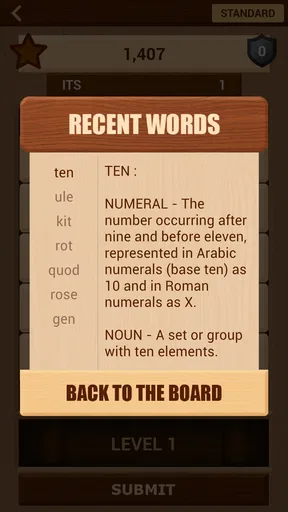
The extensive word pool is more than a promotional detail. It affects my expectations while playing. I cannot assume that the board is limited to the everyday words I use in conversation, so I approach unfamiliar combinations with more curiosity. When a word looks plausible, I am more willing to test it instead of dismissing it immediately.
That can be rewarding for players who like language in all its variety, but it also introduces a mild source of friction. A word game feels most satisfying when I understand why an answer is accepted. When an obscure entry appears, the moment can feel less like a vocabulary victory and more like a reminder that the game’s dictionary is broader than my own knowledge.
I see that trade-off as part of the experience rather than a flaw by itself. The broad vocabulary keeps the puzzle from becoming repetitive too quickly, but players who prefer only common words may occasionally feel disconnected from the accepted solutions. I recommend treating unfamiliar words as small discoveries instead of judging every round solely by personal vocabulary.
Useful habits for getting better results
My first practical tip is to avoid clearing every short word as soon as I see it. Short answers are useful for warming up, but immediately taking the easiest option can make me miss a longer path that is sitting nearby. I now scan the full board before committing, especially when several letters appear to form a promising chain.
A second helpful habit is to inspect the board in sections rather than staring at it as one large shape. I mentally check the upper area, the middle, and the lower area, then look for connections that cross between them. This reduces the feeling that I am randomly searching and makes overlooked letters easier to notice.
I also pay attention to unusual letter combinations. In many word games, players instinctively focus on familiar beginnings and endings. Here, an awkward-looking cluster can be worth testing because the game’s extensive vocabulary makes less familiar words relevant. I do not try to force every strange combination, but I give it a fair look before deciding that the board is exhausted.
Finally, I use a deliberate pause when I think there are no answers left. Walking away for a few seconds and returning with a fresh view often helps more than repeatedly dragging around the same letters. That is a small workflow change, but it suits this game particularly well because visual familiarity can hide a valid path.
Where it fits into an ordinary day
The best everyday use case is a short break that needs a little mental activity but not a major commitment. I can play while having coffee, during a quiet commute when it is safe to do so, or between tasks when I want something more engaging than scrolling. The game gives me a clear focus without asking me to remember a story, manage a large collection, or coordinate with other players.
It also works well as a shared puzzle in the same room. I have found that two people can look at the board differently: one person notices a familiar word quickly, while the other spots a longer or less obvious route. That makes it a pleasant casual activity for family members or friends, although it is not designed around conversation or cooperation in the way a dedicated multiplayer game would be.
For language learners, the experience can be useful as a recognition exercise, particularly when playing with a dictionary nearby for curiosity. I would not use it as a complete vocabulary course, because recognizing possible words and learning their meanings are different tasks. Still, it can encourage players to notice spelling patterns and investigate words they would otherwise never encounter.
The main limitation is its deliberately traditional feel
The same simplicity that makes the game approachable can make it feel limited beside newer word titles. I do not get the sense that the experience is trying to overwhelm me with constant events, elaborate customization, or a busy progression system. That restraint is welcome when I want concentration, but it may disappoint players who expect frequent rewards and visible long-term goals.
There is also a difference between challenge and uncertainty. When I fail to find a word, I am not always sure whether the board is genuinely difficult or whether I have simply missed a path. That ambiguity is part of the puzzle, yet it can become mildly frustrating during a long search. Players who prefer clearly signposted objectives may find the open-ended hunting less comfortable than a conventional level-based word game.
The broad dictionary can contribute to that feeling. A difficult round may test visual attention, vocabulary, or both, and the game does not necessarily make that distinction obvious. I enjoy the unpredictability, but someone who wants every challenge to feel carefully calibrated around familiar language may prefer a more guided alternative.
In-app purchases range from $0.49 to $9.49 per item, so the free entry point is not the whole financial picture. I would begin without spending anything and decide whether the core loop genuinely fits my habits before considering optional purchases. For a casual player, that approach keeps the game’s value easy to judge: if finding words is not enjoyable on its own, extra spending will not solve the underlying mismatch.
How it compares with other word-game choices
Compared with a daily word puzzle, this game feels less like a single scheduled challenge and more like an open supply of short sessions. A daily format can be better for people who enjoy routine, a shared answer, and a clear stopping point. Bookworm Classic is better when I want to keep playing after one puzzle or return at an unpredictable time without waiting for a new daily task.
Compared with a competitive word game, it is calmer and more private. I do not choose it when I want the pressure of a timed opponent or the excitement of comparing results immediately. I choose it when I want to improve my own observation and vocabulary without feeling that every move is being judged.
Compared with a crossword, it asks for a different kind of thinking. Crosswords depend heavily on clues and general knowledge, while this experience puts more emphasis on spotting letter paths and evaluating possible words. A crossword is the better choice when I want a theme or a clue-driven narrative. This game is the better choice when I want the letters themselves to provide the challenge.
And compared with a modern word app packed with animations and unlockable systems, this title is intentionally more focused. That can feel refreshing on a modest device or during a tired moment when I do not want visual noise. On the other hand, players motivated by collections, avatars, missions, or elaborate rewards should look elsewhere.
Who should install it, and who should skip it
I recommend it most strongly to people who enjoy word searches, anagrams, and quiet puzzle sessions. It is also a good fit for families looking for an accessible game with an Everyone content rating, since the basic idea is easy to explain and does not depend on specialist gaming knowledge.
Older phones and tablets can remain relevant here because the minimum operating-system requirement is Android 7.0 or later. The current version is 9.1.2, and the game has reached over 500 thousand installs. Those details do not determine whether someone will love it, but they do suggest that it is an established choice rather than an obscure experiment.
The average rating of 4.7 from around 8.6 thousand ratings also matches my impression that the core loop has broad appeal. I would still avoid treating that number as a guarantee. Ratings tell me that many players enjoy the format; they do not remove the central question of whether I personally like searching patiently through letters.
I would skip it if my priority is a fast reflex challenge, a competitive online match, or a deep campaign with a strong narrative. I would also hesitate if unfamiliar dictionary entries consistently make word games feel unfair. In that case, a clue-based crossword or a vocabulary app with definitions may provide a clearer sense of progress.
Small decisions that improve the experience
One of the most useful ways to approach the game is to separate discovery from scoring in my own mind. During the first scan, I look for patterns without committing immediately. During the second scan, I choose the word that seems to offer the best balance between confidence and length. This prevents me from turning every move into an impulsive tap.
I also recommend playing with a personal limit for difficult rounds. If I have been staring at the same board for too long, I stop rather than letting a relaxing game become irritating. Returning later is often more productive, and the pause preserves the casual quality that makes the title attractive in the first place.
For anyone using it to expand vocabulary, I keep a small note of unfamiliar accepted words and check their meanings afterward. That turns a passive surprise into a useful learning moment. The game itself remains a puzzle rather than a lesson, but this extra step gives the large word pool more lasting value.
Another subtle advantage is that the game can suit different attention levels. On a busy day, I can focus only on obvious words and enjoy a quick round. When I have more patience, I can search for longer or less familiar possibilities. The same basic board therefore supports both light play and more deliberate analysis, even though it does not transform into a completely different game mode.
My final recommendation
Bookworm Classic succeeds because it does not overcomplicate the pleasure of finding words. Its strongest feature is the combination of an instantly understandable board and a vocabulary large enough to keep familiar patterns from becoming completely predictable. I appreciate that it gives me room to think, and I especially like how a second look can change a board that seemed empty into one with several possibilities.
Its weaknesses are equally clear. The traditional presentation may feel quiet beside newer alternatives, obscure words can create uncertainty, and players seeking competition or elaborate progression will not find their ideal experience here. Those are meaningful limitations, not reasons to dismiss it; they simply define the audience more precisely.
Layton’s free word game is worth trying if you want a calm, repeatable way to exercise attention and vocabulary. I would start with short sessions, scan before committing to easy words, and keep a dictionary nearby if the unusual entries interest you. For me, it is most successful as a reliable mental break: not the loudest word game available, but one I can return to whenever I feel like hunting for one more word.
Verdict
Strengths of Bookworm Classic - Word Hunt
- Simple word-hunting gameplay is easy to learn and play casually.
- Classic presentation gives the game a nostalgic puzzle-book feel.
- Short rounds make it suitable for quick breaks or commutes.
- Word discovery encourages vocabulary practice and pattern recognition.
- Runs well as a lightweight game on many mobile devices.
Limitations of Bookworm Classic - Word Hunt
- Some word lists may feel repetitive after extended play.
- Difficulty can vary sharply depending on the available letters.
- The classic design may seem dated to players seeking modern visuals.
- Limited gameplay variety can reduce long-term replay value.
- Ads or in-app prompts may interrupt the otherwise relaxed experience.
Similar Picks in This Category
View All
Word Search - Word Puzzle Game
Bluetile4.8

Word Search Quest - Puzzles
Blackout Lab4.8

CodyCross: Crossword Puzzles
Fanatee, Inc.4.7

Words of Wonders: Crossword
Fugo Games4.9

Wordscapes: Word puzzle game
PeopleFun4.7

Word Search Explorer
PlaySimple Games4.9
Frequently Asked Questions
What is Bookworm Classic - Word Hunt?
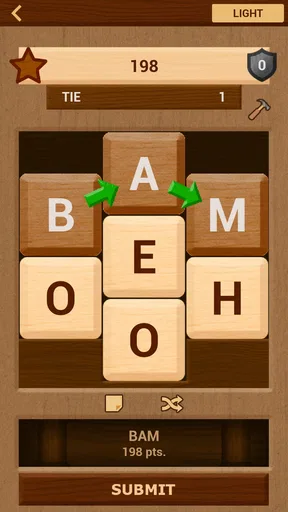
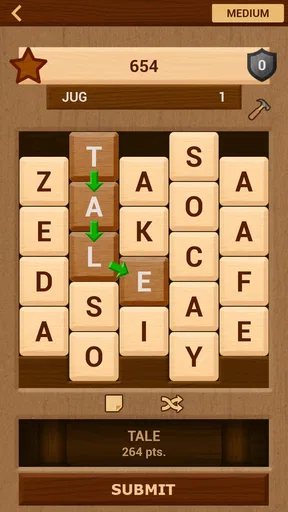
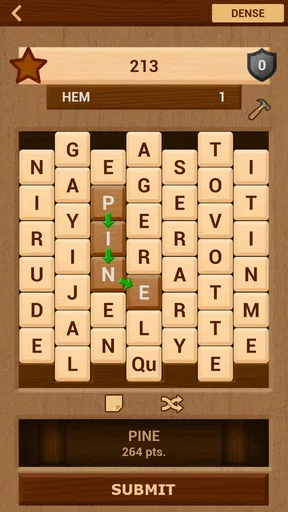
Bookworm Classic - Word Hunt is a word puzzle game in which you connect adjacent letter tiles to create valid words. Forming longer words generally produces better scores, while special tiles and board hazards can add extra strategy. It is designed for casual play, with simple controls that make it easy to start but increasingly challenging as the board develops.
How do you play Bookworm Classic - Word Hunt?
To play, look across the letter grid for neighboring tiles that can be combined into a word, then swipe or tap through the letters in the correct order. Submit the word to remove those tiles and earn points. Planning ahead is important because new letters fill the empty spaces, and careless choices may create difficult combinations or unwanted hazards.
Can Bookworm Classic - Word Hunt be played offline?
The core word-hunting gameplay is generally suitable for playing without a constant internet connection, which makes it convenient for travel or short breaks. However, certain features may depend on the version installed and could require connectivity, including advertisements, analytics, updates, online services, or store verification. It is best to launch the game once while connected before relying on offline access.
Is Bookworm Classic - Word Hunt free to download and play?
The game may be available as a free download, but the exact monetization model can vary by platform, region, and publisher. Free versions can include advertising, optional purchases, or limitations on particular features. Before installing, check the Google Play Store or Apple App Store listing for the current price, in-app purchase details, supported devices, and any subscription information.
Is Bookworm Classic - Word Hunt suitable for children and English learners?
Bookworm Classic - Word Hunt can be a useful choice for players who enjoy vocabulary games, spelling practice, and relaxed mental challenges. Its word-based format may also help English learners recognize and remember common vocabulary, although accepted words depend on the game’s dictionary. Parents should still review the store rating, advertising, privacy details, and any external links before allowing younger children to play.
Play our best games!


